

Satellite Backup for Offshore Operations: Resilience and Failover
Design satellite backup for offshore operations using business-impact requirements, independent failure domains, layered health checks, degraded traffic, and recovery tests.
What changed: New resilience guide focused on satellite backup for fixed offshore operations, including business-impact requirements, path independence, standby states, layered detection, degraded traffic policy, OT boundaries, recovery tests, and contract evidence.
Satellite backup for offshore operations is a tested protection service for defined applications, not an idle terminal labeled “secondary.” It must survive the failures assigned to it, detect when the primary path no longer meets the requirement, admit only the approved degraded traffic, preserve OT and cybersecurity boundaries, recover applications, and return to normal without creating another incident.
This guide focuses on fixed or station-keeping offshore facilities such as production platforms, drilling installations, substations, wind assets, and remote terminals. Moving ships have different route, blockage, service-plan, and regulatory conditions; use satellite failover for ships for that case. For one oil rig's complete communications design, see oil rig satellite internet.
Scope note: Organization fact check completed 17 September 2026 against the primary references listed on this page. This is not a process-safety, functional-safety, emergency-communications, cybersecurity, radio, structural, or offshore-installation approval. Tests must not disrupt protective functions or create an unsafe operating condition.
Quick Design Rule
A backup path is credible only when all six parts have evidence:
usable offshore backup = business-impact requirement
                       + independence from named primary failures
                       + ready and authorized alternate service
                       + layered detection and deterministic policy
                       + secure application recovery
                       + recurring test and maintenance evidence
Do not count these as proof:
- the terminal has power but no current subscription, authorization, software, or tested route;
- the modem shows carrier lock but the enterprise VPN, DNS, identity, or application is unavailable;
- two links use different antennas but share a gateway, shore landing, power board, firewall, or security edge;
- the router changes its default route but critical applications do not reconnect;
- a speed test passes but telemetry, voice, vendor access, and alarm workflows are untested;
- a service credit exists but offshore restoration, spares, and escalation are undefined.
Derive the Backup Requirement from Business Impact
Start with the consequence of losing each function. NIST SP 800-34 Rev. 1 describes using business-impact analysis to determine contingency requirements and priorities. Adapt that discipline to the asset's applicable safety, operational, regulatory, and company processes.
For every application, record:
- business and operational owner;
- normal and maximum outage before a defined response is required;
- data-loss tolerance, data-freshness requirement, and recovery priority;
- whether existing sessions must survive or a controlled reconnect is acceptable;
- minimum degraded bandwidth and maximum acceptable transaction time;
- local autonomous behavior and safe disconnected state;
- alternative manual process and its staffing, duration, and limitations;
- evidence required to declare the function restored.
Use a recovery worksheet:
| Application | Outage consequence | Maximum restoration time | Minimum degraded service | Session requirement | Local/manual fallback |
|---|---|---|---|---|---|
| Telemetry and alarms | |||||
| Supervisory commands | |||||
| Operations voice | |||||
| Enterprise coordination | |||||
| Vendor remote support | |||||
| Video or bulk transfer | |||||
| Welfare traffic | |||||
| Network management |
The backup capacity and activation time should come from this table, not from matching the primary link's advertised speed.
Define the Primary Failures the Satellite Must Survive
“Protect the fiber” is too vague. Describe the complete event and where it occurs:
| Primary failure | Independence question |
|---|---|
| Subsea cable or shore-landing failure | Does the satellite path avoid the same landing station, terrestrial route, power, and enterprise edge? |
| Microwave path loss or tower failure | Are the satellite antenna, structure, cable route, and power physically separate enough for the required event? |
| Cellular outage or congestion | Is the satellite provider core and terrestrial handoff independent of the affected mobile network? |
| Primary satellite terminal, beam, gateway, or provider outage | Does the backup use a different failure domain rather than another account on the same impaired path? |
| Platform power, cooling, rack, router, or firewall failure | Can the backup operate through an independent approved local path? |
| DNS, identity, VPN, cloud, or application-edge failure | Is there an alternate dependency, or is the common point explicitly accepted? |
| Cyber incident or misconfiguration | Can the asset isolate the affected route and recover from trusted configuration without opening an uncontrolled bypass? |
| Support-chain failure | Are alternative escalation, local competence, spares, configuration ownership, and manual recovery available? |
Draw both paths from application to destination. Mark shared antenna views, structures, equipment rooms, cable trays, distribution boards, network devices, software controllers, providers, gateways, points of presence, enterprise edges, DNS, identity, monitoring, and support organizations.
Independence is relative to the named failure. Two paths can be diverse for a subsea cut but share the same offshore power fault. Record both the protected and unprotected events.
Choose the Standby Model
The standby state affects cost, detection confidence, capacity readiness, and recovery time.
| Model | Normal state | Design consequences |
|---|---|---|
| Cold standby | Terminal or service inactive until an incident | Activation, authorization, configuration, subscription, software, alignment, and support delays must fit the requirement |
| Warm standby | Terminal registered and monitored; little or selected traffic | Path health can be observed, but capacity and full application behavior still require recurring tests |
| Hot standby | Path active and carrying probes or production traffic | Higher assurance and faster policy action, but shared routing, asymmetric paths, cost, and continuous security exposure must be managed |
| Active/active | Selected traffic uses both paths | This is load sharing or multipath operation as well as backup; congestion, ordering, addressing, and failure behavior are more complex |
Do not call a cold terminal “automatic backup” unless the complete activation process is automated, authorized, current, monitored, and tested within the required recovery time.
Select the Satellite Protection Service
Compare exact offers using the offshore coordinates, asset state, terminal, service plan, and contract date:
- operating authorization, service area, fixed or moving mode, and restrictions;
- antenna view, terminal compatibility, environmental limits, power states, and software lifecycle;
- purchased committed and maximum rates, contention, priority, volume policy, and congestion behavior;
- gateway, terrestrial handoff, enterprise edge, and shared dependencies where disclosed;
- delay, loss, availability, recovery, and maintenance definitions at named measurement points;
- public, private, or shared addressing, IPv4/IPv6, translation, inbound policy, and VPN support;
- NOC visibility, escalation, offshore field support, spares, repair logistics, and change control.
If the primary path is already satellite, the backup may need a different satellite, constellation, orbit, frequency, gateway, provider core, or terrestrial handoff to remove the required failure. A different brand name does not prove diversity.
For propagation-driven independence, model the actual site, frequencies, geometry, and gateways. ITU-R P.618-14 supplies an in-force Earth-space propagation method. Do not assume that two bands or orbits fail independently without examining their common site and ground-path conditions.
Build Layered Health Detection
One signal cannot describe the full offshore service. Combine layers:
- Physical and terminal: power, hardware alarms, receive/transmit state, pointing or obstruction, registration, and environmental alarms.
- Local handoff: interface, address, route, errors, queue drops, and link between terminal and site router.
- Provider path: controlled bidirectional probes through the service to more than one appropriate target.
- Security overlay: tunnel identity, security association, protected routes, counters, rekey, and peer reachability.
- Infrastructure dependencies: DNS, time, identity, enterprise edge, and application endpoint.
- Safe application transaction: a small end-to-end check that proves the required function without changing the process.
- Performance envelope: sustained delay, loss, jitter, or capacity conditions that distinguish a brownout from a hard outage.
RFC 5880 specifies Bidirectional Forwarding Detection between forwarding systems. BFD can support rapid network-path detection where both ends and the encapsulation support it; it is not a substitute for a VPN or application transaction across an arbitrary provider service.
Specify each probe's endpoint, interval, timeout, success and failure count, traffic cost, security treatment, path, and response. Timers copied from a terrestrial LAN can flap on a variable satellite path or generate unnecessary traffic.
Use State and Hysteresis
healthy -> suspect -> degraded -> failed
   ^          |          |          |
+---------- stable recovery ------+- Suspect: collect broader evidence without immediately moving all traffic.
- Degraded: protect selected applications or reduce load while confirming the condition.
- Failed: withdraw the path for the traffic classes covered by the evidence.
- Recovery: require a stable interval and controlled return policy.
Different applications can have different states. A brownout may make video unusable while telemetry remains within its accepted envelope.
Define the Degraded Traffic Policy
The backup should be engineered for the traffic it must carry during the incident:
- process alarms and approved supervisory transactions;
- essential operations voice and coordination;
- time, identity, DNS, monitoring, and other required infrastructure;
- controlled vendor or engineering access when authorized;
- enterprise applications needed for the event;
- historical, file, update, video, and bulk traffic under explicit limits;
- welfare traffic blocked, rate-limited, or admitted only from residual capacity according to policy.
Measure the application mix under the purchased backup rate. Shape before the constrained handoff, reserve capacity where the service supports it, and prevent reconnect storms or historian catch-up from starving current alarms.
Use QoS over satellite to define classification, queueing, shaping, and evidence. For telemetry transactions, use SCADA using satellite communication.
Keep Routing, Addressing, VPN, and DNS in the Recovery Plan
The backup path can pass packets while applications remain unavailable because:
- the public source address changed and a destination allowlist rejects it;
- NAT or firewall state exists only on the failed path;
- the VPN is bound to one interface, peer, address, or route;
- DNS answers or resolvers differ between services;
- the backup MTU or fragmentation behavior differs;
- identity, certificates, time, or cloud-security services are unreachable;
- return traffic follows the wrong path;
- application sessions do not survive the address or path change.
An outbound overlay to a stable enterprise edge can present consistent internal routes across different underlays. The edge then becomes a dependency that also needs capacity, monitoring, redundancy, secure administration, configuration backup, and failure testing.
RFC 7296 defines IKEv2 mutual authentication and establishment of IPsec security associations, including request/response, retransmission, liveness, and NAT-related behavior. It does not guarantee that any particular terminal, provider, firewall, and VPN product configuration will recover across a WAN change. Test the exact implementation.
Preserve the OT and Safety Boundary
The backup path must not bypass the protections applied to the primary path. NIST SP 800-82 Rev. 3 addresses OT architectures and security controls, and CISA's ICS recommended practices include defense-in-depth and remote-access guidance.
During degraded operation:
- local protective and closed-loop functions remain within their approved architecture;
- OT, operations, IT, welfare, vendor, and management zones stay separated;
- only approved sources, destinations, users, devices, protocols, and actions use the backup;
- privileged and vendor access remains authenticated, authorized, logged, time-bounded, and revocable;
- stale data, link state, application state, and command outcome remain visible to operators;
- cyber isolation and restoration do not depend on an uncontrolled internet bypass.
Document who can activate manual failover, who can modify the firewall or routing policy, and how emergency changes are reviewed and removed.
Protect the Backup's Local Dependencies
A satellite backup can disappear in the same event as the primary if both share platform infrastructure. Verify:
- antenna and terminal structure, location, access, obstruction, environmental exposure, and hazardous-area boundary;
- power feed, protection, UPS or battery, cooling, rack, cable route, network device, and local services;
- spare equipment, storage condition, configuration, credentials, certificate status, and software compatibility;
- safe maintenance isolation, test process, technician access, lifting and permit needs, and offshore logistics.
Monitor the protection path while the primary is healthy. A failed battery, expired subscription, blocked antenna view, stale certificate, corrupted configuration, or unsupported software should raise an actionable alarm before the primary outage.
Acceptance and Recurring Test Plan
Write pass/fail criteria and safe test conditions before commissioning. Preserve synchronized evidence across terminal, router, firewall, VPN, application, power, and provider systems.
1. Readiness
- verify authorization, service plan, hardware, software, subscription, configuration, certificates or keys, spares, support, and contact paths;
- confirm terminal registration, monitoring, alarms, management access, power support, and environmental state;
- verify backup capacity and security policy against the degraded traffic matrix.
2. Primary Failure Tests
- remove or isolate each approved primary dependency without endangering operations;
- prove the health logic distinguishes link-down, upstream failure, brownout, VPN failure, DNS or identity failure, and application failure;
- measure detection, policy decision, packet restoration, VPN recovery, and application recovery separately.
3. Degraded Operation
- run critical transactions, voice, monitoring, identity, DNS, and approved remote support;
- add controlled lower-priority traffic and verify queue, shaping, loss, delay, and application outcomes;
- confirm unauthorized or suppressed traffic remains blocked.
4. Failback
- restore an unstable primary and prove hold-down or stability logic prevents flapping;
- verify whether existing sessions stay on the backup or move, and how routes, NAT, VPN, DNS, QoS, and monitoring return;
- confirm alarms close correctly and the backup remains ready.
5. Operations and Support
- open a provider incident, exercise escalation, verify raw evidence access, and confirm ownership across organizations;
- test configuration restoration, spare replacement, credential renewal, and manual recovery;
- retain exceptions, corrective actions, retest results, and accountable sign-off.
Set a recurring test frequency from the business impact, rate of configuration change, terminal standby state, access constraints, and applicable governance. “Quarterly” or “annual” should not be copied without that rationale.
Contract Schedule
The backup order should define:
- exact asset, coordinates or operating area, terminal, plan, mode, service period, and authorization;
- standby state, activation process, capacity readiness, data policy, congestion treatment, and charges;
- performance and availability measurement points, samples, periods, exclusions, maintenance, evidence, and remedies;
- hardware, software, subscription, addressing, VPN, DNS, monitoring, alarm, and customer responsibilities;
- NOC response, restoration, offshore dispatch, spares, configuration, credential, and lifecycle support;
- changes to satellite, constellation, beam, gateway, provider core, terminal, software, plan, price, or policy;
- test support, chronic-failure rights, suspension, renewal, termination, equipment return, and data or configuration handover.
A backup service with no test rights, raw evidence, escalation path, or change control can look inexpensive until it is needed.
FAQ
What is the best satellite backup for an offshore platform?
There is no universal best service. Select the path that survives the platform's named primary failures, carries the approved degraded applications, preserves the OT boundary, and meets authorization, physical, support, and recovery requirements.
Should the backup use GEO or LEO?
Choose from the failure-domain and application evidence. A different orbit can improve diversity, but independence also depends on antenna location, power, terminal, gateway, terrestrial handoff, provider core, routing, security edge, and operations.
Does the backup need to be always active?
Not always. Cold, warm, hot, and active/active designs have different activation, monitoring, capacity, cost, and security properties. The required recovery time and confidence determine the suitable state.
How quickly should satellite failover happen?
Derive the requirement per application. Measure detection, network policy, packet restoration, VPN recovery, and application recovery separately. Very aggressive timers can cause flapping without improving the true service outcome.
Can offshore SCADA use the backup link?
It can when the traffic, timing, addressing, security, local autonomy, and recovery behavior pass the SCADA acceptance criteria. Keep protective and fast closed-loop functions within their approved local design.
Is a second satellite provider enough for redundancy?
No. Providers can share antenna views, local equipment, gateways, terrestrial routes, security edges, DNS, or support. Map and test the failures that matter.
How often should the backup be tested?
Set the interval from outage consequence, configuration-change rate, standby state, support and certificate lifecycle, and governance requirements. Include safe application transactions, not only terminal power-on.
Related Guides
- Oil Rig Satellite Internet — complete platform terminal, network, hazardous-area, and acceptance design
- Oil and Gas Satellite Communications — portfolio planning across wells, pipelines, plants, and offshore assets
- SCADA Using Satellite Communication — application timing, protocol behavior, outage handling, and tests
- Satellite Failover for Ships — moving-vessel route, blockage, and multi-WAN failover design
- Satellite Diversity Explained — orbit, satellite, gateway, site, and frequency diversity
- Remote Site Network Monitoring — layered RF, terminal, IP, and application monitoring
Author

Organizational byline for SATCOM Index technical content. A named technical reviewer appears separately only when identity, scope, and permission are verified.
Categories
More Posts
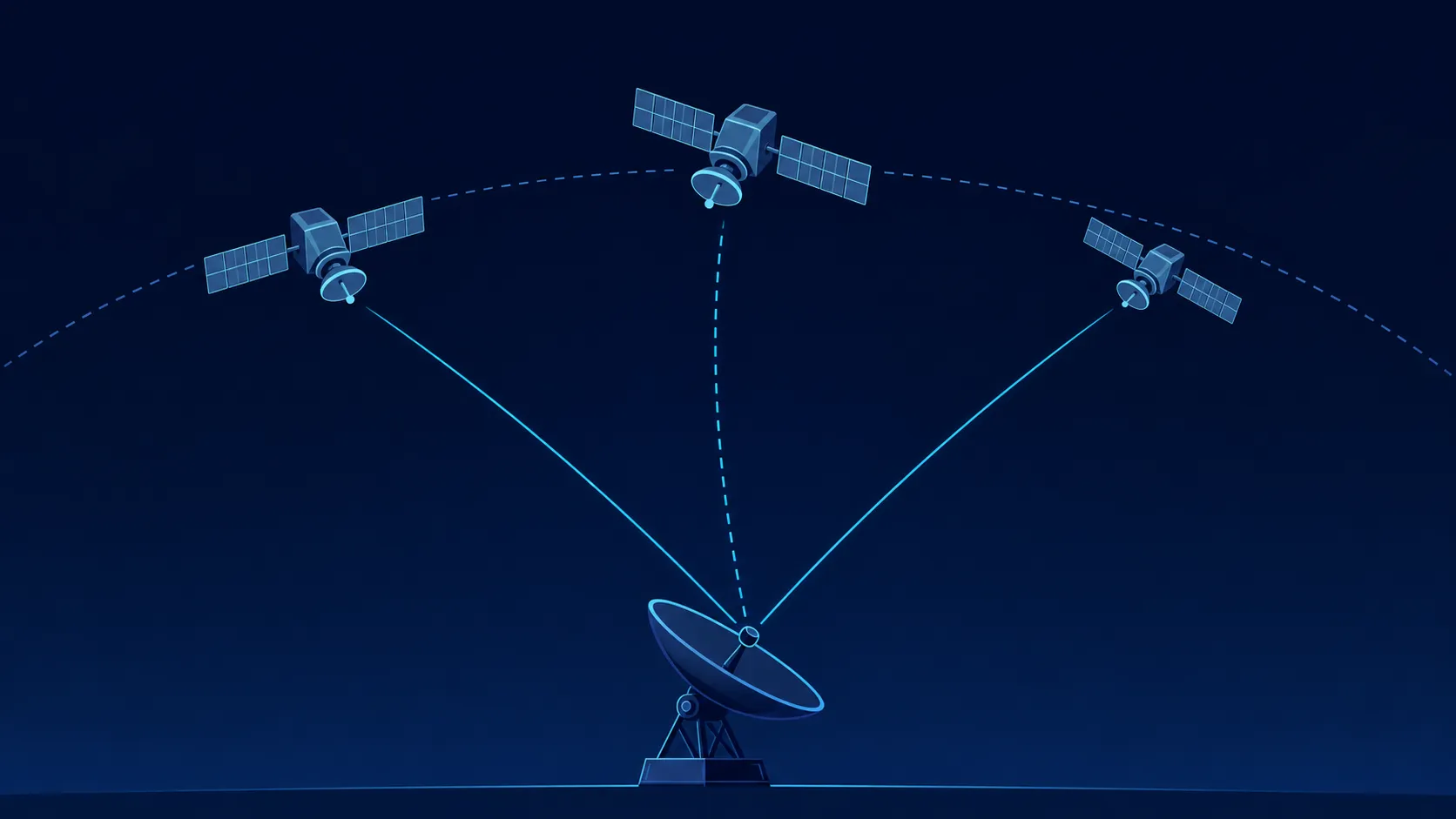
Satellite Diversity Explained: How Multi-Satellite and Multi-Path Design Improves Resilience
Learn how satellite diversity techniques — including satellite, gateway, site, orbit, and frequency diversity — improve network resilience for enterprise and critical infrastructure.
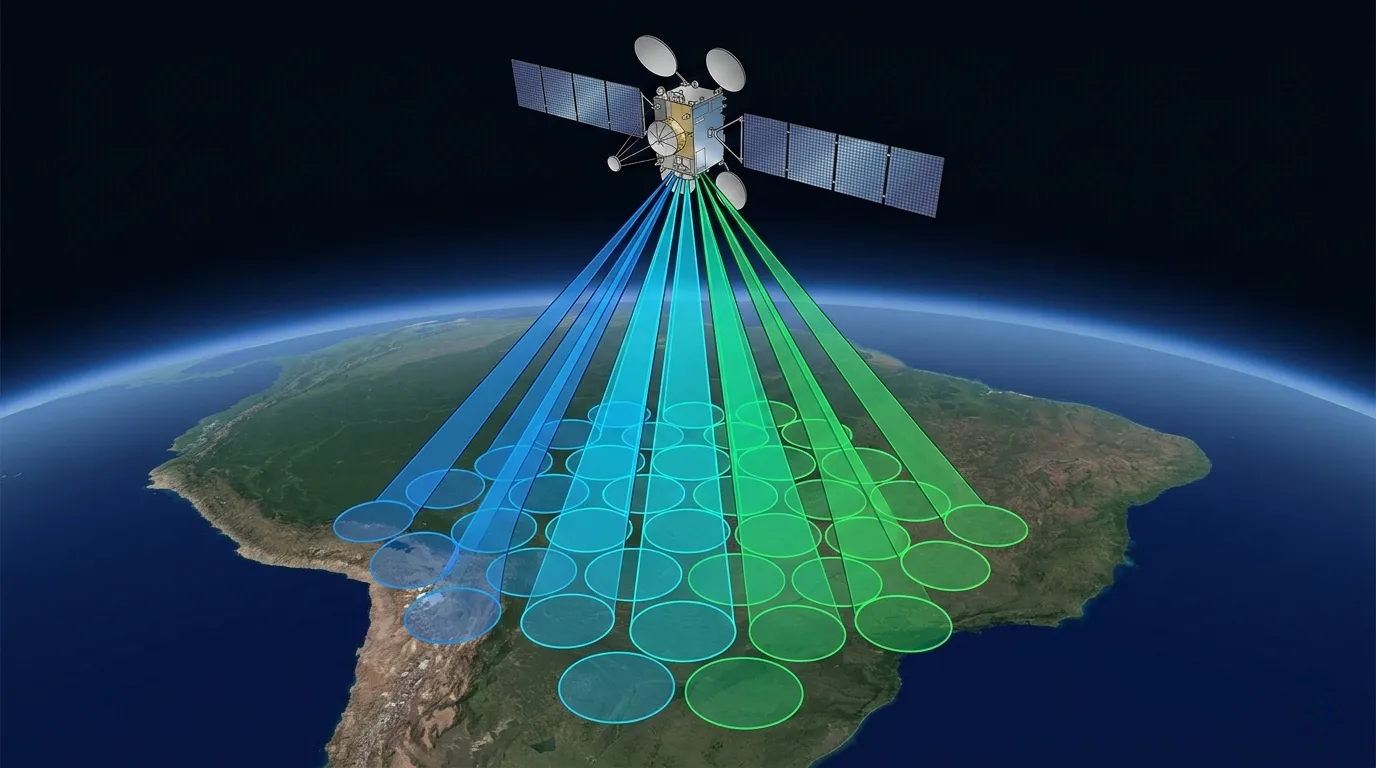
HTS Spot Beams and Beamforming Explained: How Modern Satellites Increase Capacity
Engineering guide to HTS spot beams and beamforming covering frequency reuse, phased-array beam steering, gateway design, and capacity scaling trade-offs.

Maritime Satellite Internet for Ships: Design and Acceptance Guide
A practical maritime satellite internet guide for ships: compare services, verify route coverage, integrate terminals, separate onboard networks, and run sea trials.